

Tldr; Across offers the cross-chain ecosystem’s optimal bridging experience. Thanks to several important design choices, it’s also an attractive solution for liquidity providers looking to put assets to work.
Key takeaways:
Across is a capital-efficient bridge that offers maximized returns to LPs through one liquidity pool.
The bridge’s design benefits LPs as there is no impermanent loss.
When LPs deposit to Across, they provide liquidity in a passive way and accrue rewards that outpace other options.
The bridging space is competitive, but Across has taken a lead in the market by offering meaningful benefits to users. When the savvy bridge user wants to move back and forth from Ethereum to Layer 2, they aren’t short of options. However, they pick Across because they know it’s the fastest, cheapest, and most secure bridge on the market.
While Across stands out as the winning option for bridgers, its unique design choices also benefit liquidity providers. Across offers several advantages that other bridges lack, in large part because it was built with capital efficiency at the front of mind. The result is a reliable bridge solution that’s as attractive to LPs looking to get returns on their capital as the bridgers that want to move their assets as quickly and cheaply as possible.
Unified liquidity and higher returns
Most bridges ask LPs to provide liquidity across every destination they serve. When a user wants to move 10 ETH from mainnet to Optimism, the bridge effectively relies on the LPs to make sure the Optimism pool holds enough ETH to process the transaction. If liquidity runs out, the bridge must wait for new LPs or arbitrageurs to rebalance the pools. This creates fragmentation, resulting in high gas expenditure for LPs and higher costs for users.
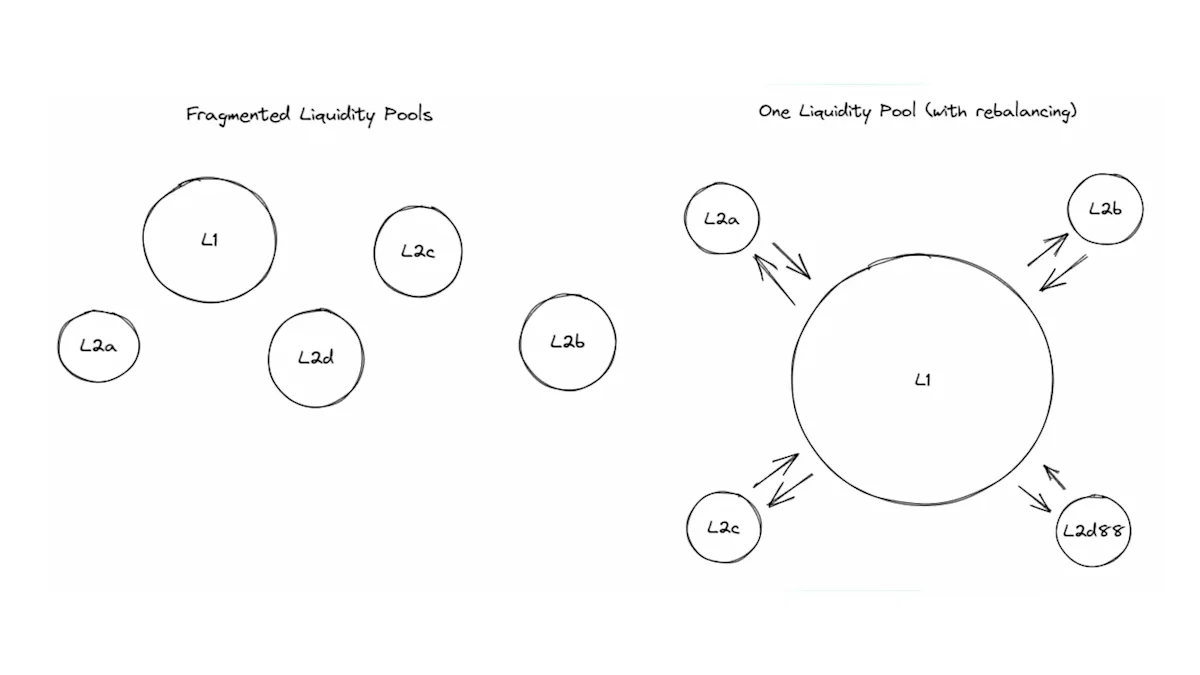
Fragmented liquidity vs. unified liquidity. With fragmented liquidity pools, LPs deposit assets across mainnet and all of its destinations, relying on LPs and arbitrageurs to ensure each pool is full. With a unified liquidity pool, LPs commit assets on mainnet only, bots take care of rebalancing, and assets are available at each destination whenever the user requests it.
Conversely, Across uses one liquidity pool, with bots and data workers responsible for rebalancing. LPs simply deposit their capital to mainnet, and they don’t need to move their funds to look for the best return. When the user asks for 10 ETH on Optimism, a relayer fulfills the request and then gets repaid by LPs through the bridge’s pool. As long as the pool holds enough ETH, the user gets their funds as requested and the LPs earn a fee.
As Across unifies liquidity, LPs stay passive, save on gas, and enjoy higher returns.
Lending model in place of AMM model
Bridges frequently match orders using an automated market maker (AMM) bonding curve model akin to Uniswap. In many cases, an intermediary token is swapped against the canonical asset to facilitate the transfer. When the user sends 10 ETH from mainnet, it may be traded for xETH before they get their funds on Optimism. Ideally, the bridge’s pools are well-balanced and the user suffers no slippage.
But if the pools become imbalanced, ETH and xETH can fall out of parity. The variance in price creates an opportunity for arbitrageurs to step in and rebalance the pools. When this happens, the user suffers from slippage (i.e. they receive less ETH than they expected), while the LPs pay an arbitrage tax. This problem is exacerbated when bridges fragment liquidity across multiple pools.
Across adopts an interest rate model closer to Compound or Aave. When LPs fill an order, their job is to lend their assets, and they earn a fee for doing so. The user isn’t there to swap their tokens when they go to the bridge — they just want to deposit their 10 ETH on mainnet and get 10 ETH minus a small fee on Optimism. LPs make this happen, and the fee they earn can be thought of as an interest rate on their loan.
Similar to Compound and Aave, Across bridging fees increase as an asset’s utilization rate does. As more bridgers want to access an asset, the LPs enjoy higher yields on their deposited capital.
Across’ interest rate model ensures steady fees while preventing arbitrage tax on LPs and user slippage.
How reward locking benefits loyal LPs
In late 2022, Across launched reward locking to incentivize long-term LP engagement. Reward locking introduced a multiplier on top of a base reward emission rate for the amount of time LPs committed their capital. This mechanism addressed shortfalls in liquidity mining by paying LPs for the amount of time they supported the protocol.
Reward locking launched with a maximum multiplier of 3 for LPs that left their capital in the pool for at least 100 days. This created a group of loyal Across supporters. The Across DAO recently passed a governance proposal to tweak the mechanism’s parameters, with the goal of attracting new capital. Now, the base reward emissions rate has increased by 50%, while the maximum rewards multiplier has decreased to 2.
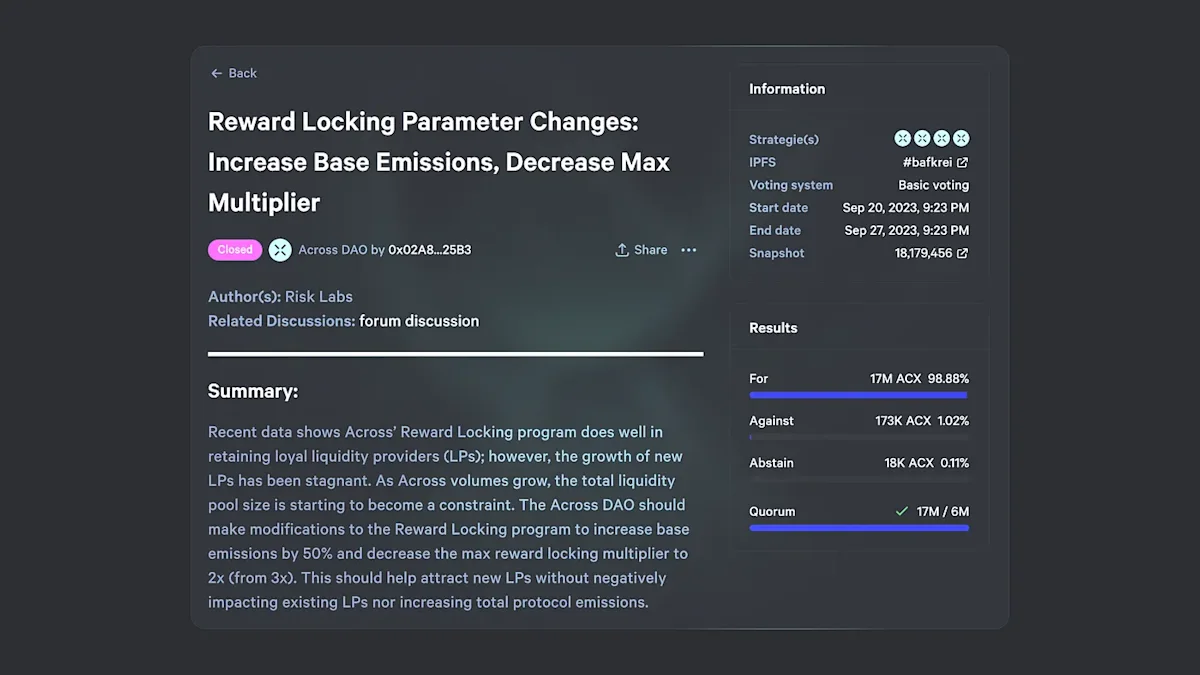
While the reward locking program has been a success, the Across DAO overwhelmingly voted in favor of tweaking the mechanism in September 2023. This change should benefit new LPs.
The adjusted reward locking program seeks to attract new LPs by offering them higher initial rewards on their deposit. Loyal LPs who do not claim their rewards can earn the max multiplier over a shorter time frame resulting in generous yields.
Reward locking incentivizes LPs to support the protocol, paying them extra for the time they commit their capital.
Passive liquidity providing
As Across uses one liquidity pool with single-sided staking, LPs can support the protocol in a truly passive manner. They can simply deposit their ETH or stablecoins to the pool on mainnet and wait for their yield. This is highlighted through Across’ intuitive user interface — enter the amount and hit “Add Liquidity.”
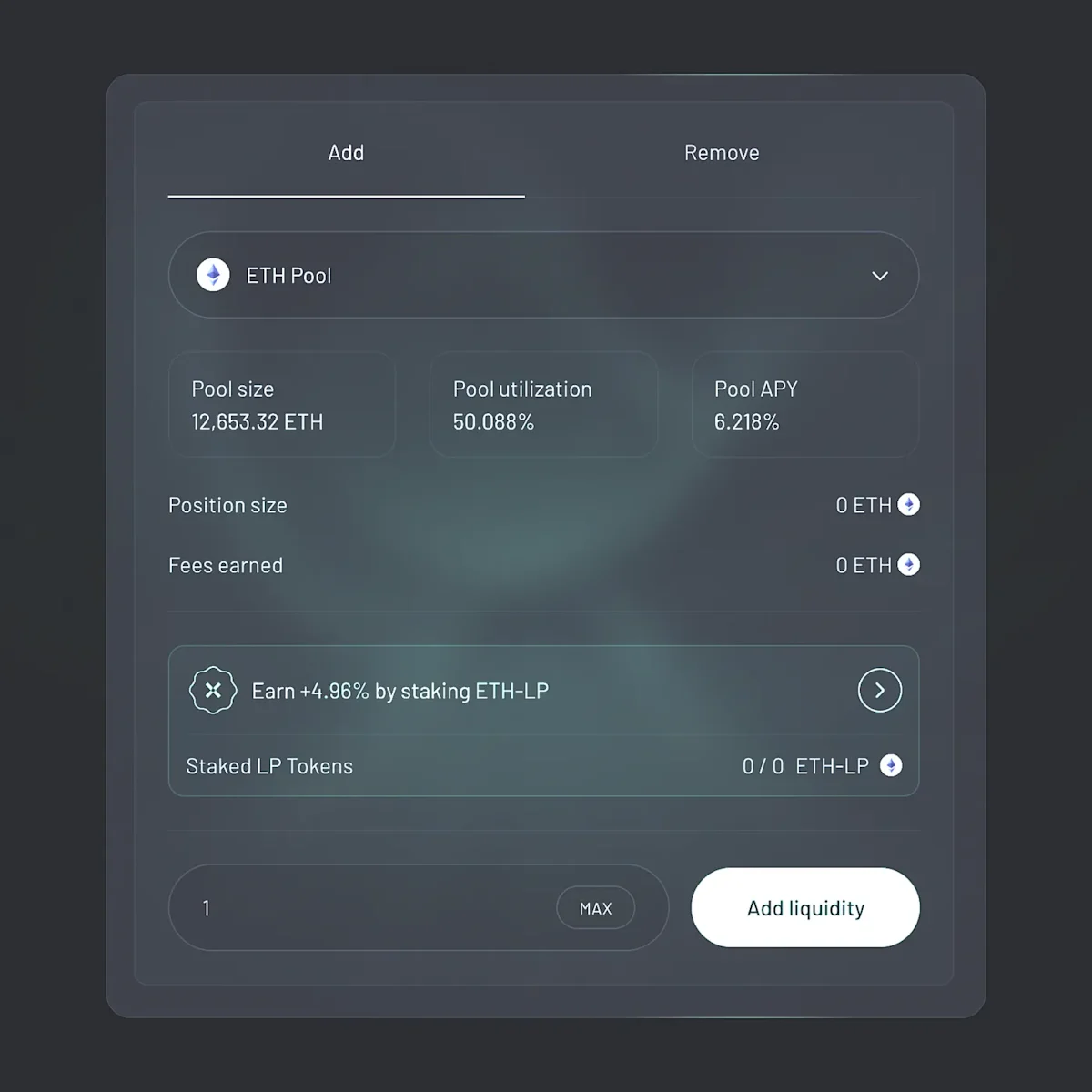
Just one click to add liquidity to Across.
Staking their LP tokens requires one further transaction, then they can sit on their deposit and rewards until they decide to leave the pool. For each pool, LPs can easily track their LP size, APY, multiplier, days staked, and total rewards all on Across’ Rewards Page.
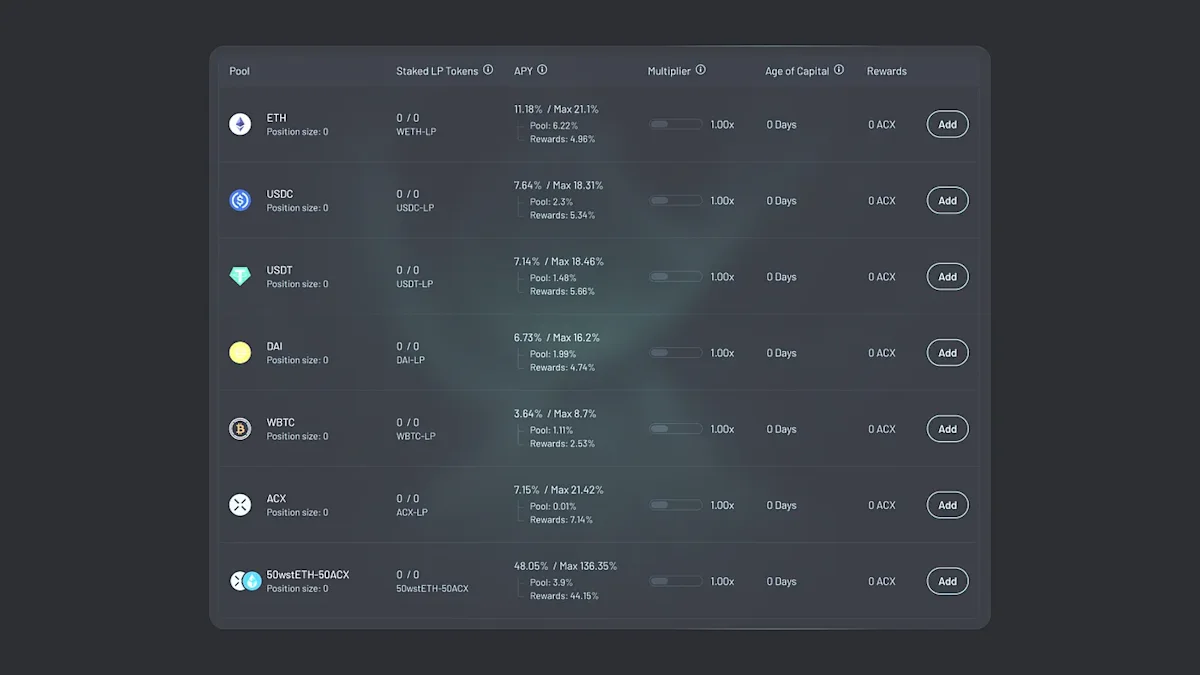
LPs can monitor all pools on Across’ Rewards Page.
While bridges often require LPs to be active, Across lets LPs make a passive commitment. This especially benefits smaller users that want to earn rewards without making regular transfers.
LPs deposit their capital to Across through a simple interface and passively watch their rewards grow.
Across and the cross-chain landscape
At its core, Across focuses on capital efficiency and gas optimization. This approach benefits LPs as they can make a one-off deposit of their asset of choice, and they don’t suffer from arbitrage tax or gas costs from moving their capital. Across’ novel reward locking model also rewards LPs for the time they support the protocol. It doesn’t matter that the LP stays passive — they actually get paid for sitting back and leaving their assets untouched.
When compared to other yields available in the cross-chain and DeFi ecosystem, Across represents one of the most attractive options for LPs large and small. To learn more about how to provide liquidity to Across, visit our docs here.
- Written by Kevin Chan
Across Protocol is an intents-based interoperability protocol, capable of filling and settling cross-chain intents. It is made up of the Across Bridge, a powerfully efficient cross-chain transfer tool for end users, Across+, a chain abstraction tool that utilizes cross-chain bridge hooks to fulfill user intents and Across Settlement, a settlement layer for all cross-chain intent order flow. As the multichain economy continues to evolve, intents-based settlement is the key to solving interoperability and Across is at the core of its execution.
Website | Forum | Discord | Twitter | YouTube | Docs | Github